


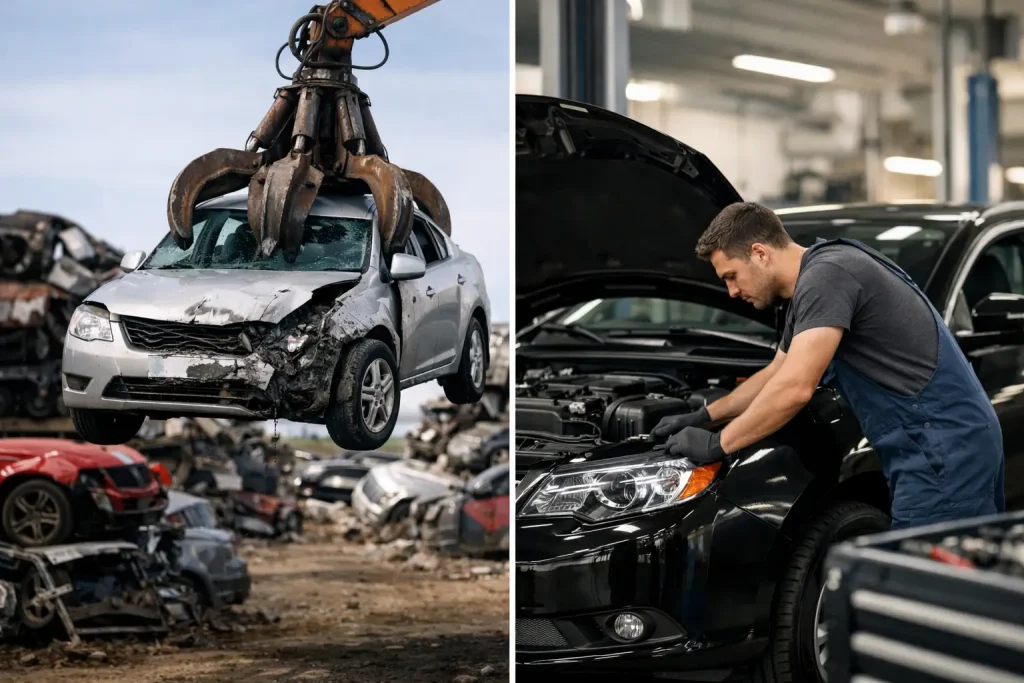
That moment usually comes after the latest repair quote. The car is already hard to trust, it is taking up space, and now you are stuck weighing scrapping car vs repairing when neither option feels great. For most people, this is not really about cars. It is about whether the vehicle still makes practical sense for your time, money, and peace of mind.
If the vehicle is older, unreliable, uninsured, or not running at all, the decision often gets clearer once you look past the hope that one more repair will solve everything. Sometimes it will. A lot of times, it will not.
Scrapping car vs repairing starts with the real cost
The first number people look at is the repair estimate. That matters, but it is not the full picture. A $2,000 repair on a car worth $8,000 may be annoying but reasonable. The same repair on a vehicle worth $1,200 is a different conversation.
You also have to think about what comes next. If the transmission is failing, the engine is burning oil, or the wiring has ongoing issues, one repair rarely means the problems are over. Older vehicles can turn into a rolling series of bills. You fix one thing, then another warning light comes on two weeks later.
A good practical question is this: after paying for the repair, would you feel confident driving the vehicle for the next year? If the answer is no, repairing it may just delay the inevitable.
There are also costs people forget to count. Towing, diagnostic fees, time off work, temporary transportation, insurance on a vehicle you barely trust, and the simple frustration of repeated breakdowns all add up. A car does not need to be completely dead to become more trouble than it is worth.
When repairing still makes sense
Not every older vehicle should be scrapped. Sometimes the smarter move is to fix it and keep going.
Repairing usually makes sense when the problem is isolated, the rest of the vehicle is in decent condition, and the car still fits your needs. If it has been reliable overall and the repair cost is less than what replacing the vehicle would realistically cost you, fixing it may be the practical choice.
This is especially true for issues like brakes, a starter, a battery problem, or another straightforward repair on a vehicle that has otherwise been dependable. No car is maintenance-free. A single repair does not automatically mean it is time to get rid of it.
It also matters whether the vehicle has decent remaining life. A car with a solid body, manageable mileage for its age, and no major safety concerns may still have value as a daily driver. In that case, repairing can be the cheaper option over the next year or two.
The key is honesty. If you are repairing it because it truly solves the problem, that is one thing. If you are repairing it because you feel stuck and do not want to deal with getting rid of it, that is something else.
When scrapping a car is the better call
There is a point where fixing a vehicle stops being practical. Most owners know it when they see it, even if they do not want to admit it yet.
If the vehicle is non-running, has major engine or transmission failure, severe electrical issues, heavy rust, long-term rodent damage, or repeated breakdowns that keep coming back, scrapping it is often the cleaner solution. The same goes for cars that have been parked for months or years and are now creating storage headaches, neighborhood complaints, or property cleanup problems.
Safety is another big factor. If you are questioning whether the vehicle is safe for your family, that matters more than squeezing a few more months out of it. A car that stalls unpredictably, overheats, struggles to brake properly, or cannot be insured without more work is not saving you money. It is creating risk.
Then there is the stress factor. This matters more than people think. If the car has become a constant source of uncertainty, calls to tow trucks, repair shop appointments, and money you did not plan to spend, scrapping it can be a relief. For many homeowners and rural property owners, finally getting that dead or damaged vehicle off the property is less about the car and more about getting their space back.
The 50 percent rule is useful, but not perfect
A common guideline is this: if the repair will cost more than half the vehicle’s value, scrapping it deserves serious consideration. That rule is helpful because it stops people from throwing large amounts of money at low-value vehicles.
Still, it is not perfect. A cheap older car that only needs one repair may still be worth fixing if replacing it would put you into debt or create a bigger burden. On the other hand, even a repair under 50 percent may not be worth it if the car has multiple major issues waiting in line.
That is why condition matters more than a formula. The real question is not just what this repair costs. It is what this repair buys you.
Scrapping car vs repairing for non-running vehicles
When the vehicle does not run at all, the balance shifts fast. At that point, every next step gets harder. You cannot easily move it, sell it privately, or test whether a repair will truly solve the issue without spending more money first.
For non-running vehicles, owners often hang on because they think they will deal with it later. Later turns into another season, then another year. Meanwhile the vehicle keeps taking up room in the driveway, garage, yard, or side lot.
In areas around Salmon Arm, Vernon, Kelowna, and other Interior communities, this happens a lot with old farm vehicles, project cars that stalled out, and daily drivers that failed one major system too many. If you already know you do not want to invest in getting it roadworthy again, keeping it longer usually does not improve the situation.
Questions to ask before you decide
A simple way to sort this out is to ask yourself a few direct questions. If you repaired the vehicle tomorrow, would you trust it? If the answer is no, that tells you something.
Ask whether the vehicle still serves a purpose. If it is just sitting there uninsured and unused, that is different from a car you rely on every day. Also ask whether this is the first major repair or one in a long chain of expensive problems. Patterns matter.
Finally, look at your timeline. Do you need a quick, practical solution, or are you prepared for more shop visits, more costs, and more uncertainty? A lot of people already know the answer. They are just looking for permission to stop putting money into a vehicle that is clearly done.
Practical decision-making beats sentimental value
People keep cars for good reasons. Maybe it was dependable for years. Maybe it belonged to a parent. Maybe you just hate wasting things. That is all understandable.
But sentimental value does not lower repair bills or make an unsafe car reliable. There is nothing wrong with deciding that a vehicle has reached the end of its useful life. In fact, that is often the most responsible choice.
For a local company like Scrap Your Car, the job is simple: help people remove a problem vehicle quickly and professionally when they are ready. That works well for owners who do not want to keep chasing repairs or deal with a dead car sitting on their property any longer.
If you are stuck between scrapping car vs repairing, do not focus on whether the car can be fixed. Almost anything can be fixed with enough money. Focus on whether fixing it still makes sense for your life. When the answer is no, letting it go is not giving up. It is finally dealing with the problem and moving on.