
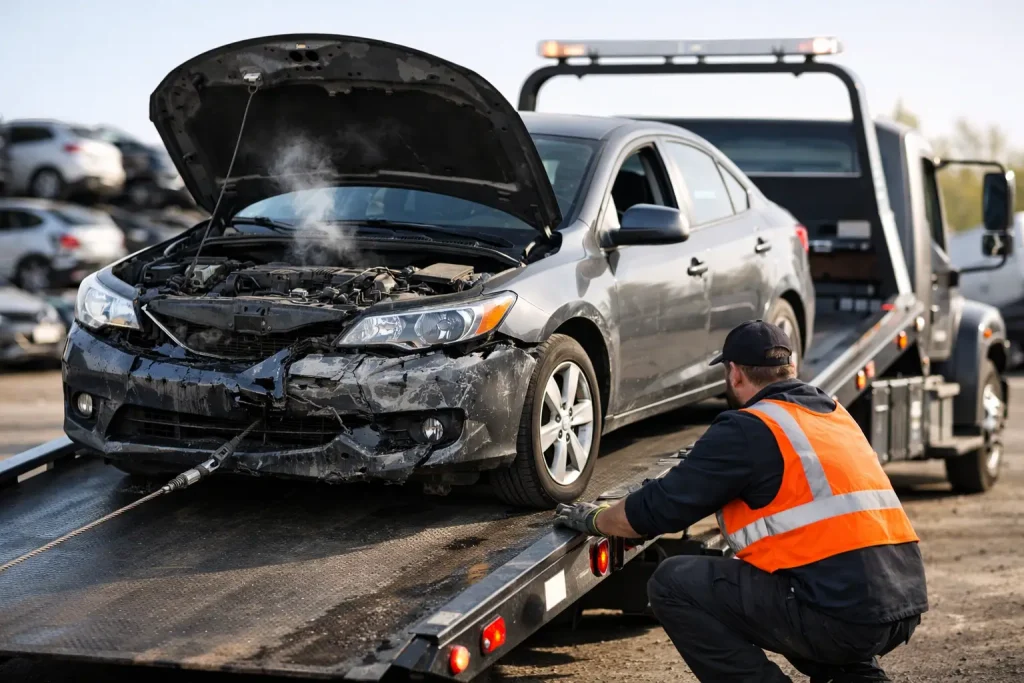
A dead engine changes the math fast. One day your vehicle is inconvenient. The next, it is sitting in the driveway, leaking time and money, and turning into a problem you do not want to deal with. That is why damaged car pickup after engine failure is often the most practical next step, especially when the vehicle is not worth another round of repairs.
For most owners, this is not really an engine question. It is a property problem, a budget problem, and a stress problem. Once a car stops running because of major engine damage, the real decision becomes simple: fix it, store it, or get it removed before it creates one more headache.
When damaged car pickup after engine failure makes sense
There is a point where repairs stop being responsible and start being wishful thinking. If you have been quoted for an engine replacement, a rebuild, or a long list of related work, you already know how quickly the cost climbs. Even if the repair is technically possible, that does not always mean it is a smart use of money.
A pickup service makes sense when the engine failure is tied to bigger issues. Maybe the vehicle also has body damage, high mileage, electrical problems, a transmission issue, or has been sitting uninsured for months. In that situation, the engine is not the only problem. It is just the one that finally forced the decision.
It also makes sense when the vehicle is stuck in a driveway, garage, side yard, or rural property and you do not have the time, tools, or desire to figure out transportation. A non-running car is hard enough to deal with when it is in town. It is even harder when it is parked on acreage, behind another vehicle, or sitting where it has become an eyesore.
What engine failure usually leads to in the real world
People often wait longer than they should after an engine goes. That is understandable. A vehicle can carry a lot of memories, and nobody likes making a final call on something they once depended on every day.
But once an engine is gone, the vehicle tends to create a chain of smaller problems. It takes up space. It can trigger complaints from neighbors or bylaw concerns. It becomes one more thing to move around when guests come over, when snow falls, or when you need access to your own property. If it is uninsured or unregistered, it can also become a liability you keep meaning to deal with later.
There is also the false hope issue. Many owners keep a dead vehicle because they think they will decide next month. Then next month becomes next season. By the time they are ready, the tires are sunk in, the battery is dead, the brakes are seized, and removal is more urgent than it needed to be.
Repair or remove? The answer depends on a few things
There is no one-size-fits-all answer here. Some engine failures are worth fixing. Most are not, especially on older vehicles.
If the car is newer, otherwise reliable, and worth substantially more than the repair cost, fixing it may still make sense. The same goes for a vehicle with sentimental value or one that fills a specific need you cannot replace easily.
But if the engine failure happened in a vehicle that already had a long list of issues, the decision usually gets clearer. A blown engine in a high-mileage car is rarely the only expense coming. You may be looking at cooling system problems, worn suspension, rust, or electrical faults right behind it. Paying for the engine does not erase the rest.
That is where practical thinking matters more than hopeful thinking. If the repair bill feels hard to justify, and you mainly want the vehicle gone without more hassle, pickup is usually the better call.
What to expect from a damaged vehicle pickup service
Most people imagine this process is more complicated than it is. In reality, it should be straightforward.
You call, describe the vehicle, explain that the engine has failed, and say where it is parked. From there, the main questions are usually about access, ownership, and the condition of the vehicle. If the car does not run, that is not unusual. In fact, many pickups involve vehicles that have not moved in months or longer.
A professional removal team should know how to handle tight driveways, residential properties, and awkward parking situations without turning the job into a project for the owner. That matters when you are already frustrated and just want the thing gone.
If the vehicle is on private property, the process is usually faster than people expect. If it is blocked in, parked on soft ground, or located in a rural spot, that can affect timing and equipment, but it does not automatically stop the pickup. It just means it helps to be clear about the setup when you call.
Why speed matters more than most owners realize
Waiting rarely makes a dead car easier to remove. It usually makes it harder.
A vehicle with engine failure tends to sit because there is no immediate plan for it. But the longer it stays put, the more likely it is to collect other problems. Fluids can leak. Animals can get into it. Weather takes its toll. It becomes part of the property instead of just a temporary problem.
Fast pickup is not only about convenience. It is about avoiding the next issue. That could mean bylaw pressure, tenant complaints, family frustration, or just the everyday annoyance of seeing a non-running vehicle every time you pull into your driveway.
For homeowners in places like Salmon Arm, Vernon, or Kelowna, where space matters and weather can turn a simple removal into a bigger job, acting sooner is usually the easier route.
Common situations where owners call for pickup
Engine failure shows up in a few familiar ways. Sometimes the car quit suddenly on the road and got towed home. Sometimes it developed a knock, overheated badly, or blew smoke until it was clear the engine was done. In other cases, the vehicle has been sitting after a mechanic gave the kind of estimate that made the decision for you.
Another common situation is the second-car problem. The household kept an older vehicle as a backup, then the engine went and nobody wanted to put more money into it. Months later, it is still parked where it does nothing except take up room.
There are also estate, move-out, and property cleanup situations where a dead car has to be dealt with quickly. In those cases, owners are not looking for technical advice. They want someone local, professional, and easy to reach who can handle removal without making the process harder.
How to make the pickup go smoothly
A little preparation helps, but this should not become a chore list.
The main thing is to know where the vehicle is, make sure you can describe how to access it, and have basic ownership paperwork ready if needed. If the steering is locked, the tires are flat, or the car is boxed in, mention that upfront. Good pickup service depends on clear information, not surprises.
It also helps to remove personal belongings before the truck arrives. Once the vehicle is loaded, most owners do not want to think about it again, and that is exactly the point. One call should move the process from stalled-out problem to handled.
For local owners dealing with a dead vehicle at home, Scrap Your Car is built around that kind of straightforward service. No drawn-out process. No back-and-forth. Just practical help getting the vehicle off your property.
The biggest benefit is relief
People talk about engine failure like it is only a mechanical issue, but the real impact is usually emotional and practical. It is one more thing hanging over your head. One more expense you do not want. One more job you keep putting off because it feels bigger than it should be.
That is why pickup matters. It clears the space, removes the nuisance, and lets you stop spending energy on a vehicle that is not coming back into your daily life. For many owners, that relief is worth far more than one more round of quotes, delays, and maybe-later decisions.
If your car has a failed engine and is just sitting there, you probably already know the answer. The best next step is often the simplest one – get it picked up and move on.