
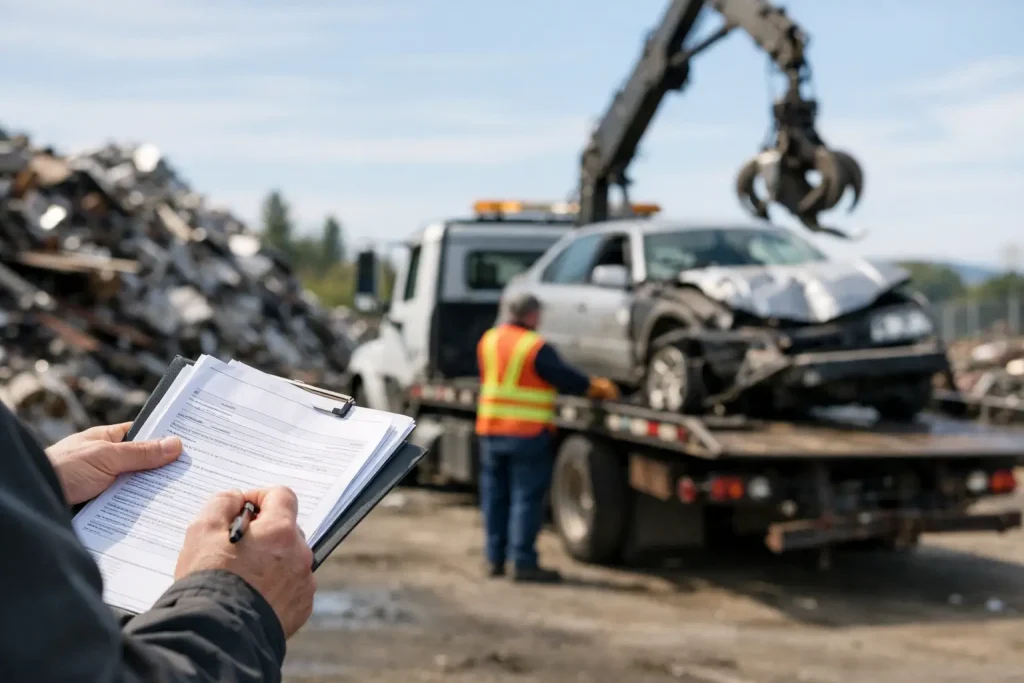
That old vehicle may be taking up a driveway, blocking a garage, or becoming one more thing on your property you have to worry about. When people ask, “do I need papers for scrap pickup,” the short answer is: paperwork matters, but the exact documents needed depend on your situation. A straightforward removal is usually easiest when you can show that the vehicle is yours and provide the available ownership information.
If you are unsure what you have, do not let that stop you from making the call. A local pickup professional can ask a few basic questions before arriving, so you know what to gather and whether there may be an extra step to handle first.
Do I Need Papers for Scrap Pickup?
For most vehicle pickups, you should expect to provide proof that you own the vehicle or are legally allowed to arrange its removal. In British Columbia, the most useful document is usually the vehicle registration in your name. It connects you to the vehicle identification number and helps establish that the vehicle on your property is yours to dispose of.
A government-issued photo ID is also commonly helpful. The name on your ID should match the registration whenever possible. Having both ready avoids confusion, especially when the vehicle has been sitting for years and the paperwork has been tucked away in a filing cabinet, desk drawer, or glove box.
This is not needless red tape. A professional removal company has a responsibility to avoid taking a vehicle from someone who does not own it or have permission from the owner. Clear paperwork protects you, your property, and the person picking up the vehicle.
The Best Documents to Have Ready
The ideal situation is simple: you have your current or previous vehicle registration and photo ID. Bring those together when the pickup is arranged, and make sure the vehicle identification number on the paperwork matches the vehicle if it is readable.
If you have additional ownership records, keep them nearby. A bill of sale, transfer records, or correspondence related to the vehicle can help explain the situation if the registration is outdated. They may not replace the main document in every case, but they can be useful supporting information.
Before the truck arrives, remove personal belongings from the vehicle and check the areas where you may have stored paperwork. People often find registrations in old envelopes, service folders, or the paperwork from an insurance renewal. A few minutes of preparation can prevent a delay at pickup time.
What If You Lost the Registration?
Lost registration is common. Old cars are often parked after a transmission failure, engine problem, collision, or a decision that repairs are no longer worth the cost. Months turn into years, and the paperwork disappears along the way.
Do not assume a lost registration means the vehicle cannot be picked up. Start by being honest about what you do have. You may be able to obtain replacement ownership information through the appropriate insurance and licensing office, depending on the vehicle’s status and your records.
The right next step depends on whether the vehicle is still registered in your name, whether you can identify the vehicle identification number, and whether there are any ownership issues. A reputable pickup service should not promise that every no-paper situation can be handled the same way. Instead, they should explain what information they need to assess your specific case.
If the vehicle is clearly yours but the documents are missing, gathering your ID, address details, and any records tied to the vehicle before you call can make the conversation much faster.
When the Name on the Registration Does Not Match Yours
This is where a quick pickup can become more complicated. Maybe the vehicle was bought from a relative, left behind by a previous owner, or acquired years ago without the paperwork being properly transferred. Even if it has been parked on your property for a long time, that does not automatically prove you have authority to arrange removal.
You may need documentation showing the transfer of ownership or written authorization from the registered owner. If the registered owner has passed away, estate documents or direction from the person authorized to manage the estate may be required. Requirements can vary, so it is better to sort this out before scheduling a truck.
The same goes for a vehicle owned by a business. The person requesting pickup should be able to show they are authorized to act for that business. It may feel formal for an old, non-running vehicle, but it helps prevent disputes later.
Vehicles on Rural Properties and Long-Term Storage
Across the Shuswap and Interior, it is common to find vehicles that have been parked behind a shop, at a cabin, or along the edge of a rural property for a very long time. The condition of the vehicle does not change the ownership question. A vehicle can be rusted, uninsured, non-operational, or covered in brush and still require proper authorization for removal.
Access can matter, too. Let the pickup company know if the vehicle is on a steep driveway, behind a gate, in soft ground, or in a tight area near other vehicles or buildings. That is separate from paperwork, but it allows the crew to plan the pickup safely and arrive with the right equipment.
A clear description over the phone is usually more useful than guessing. Mention whether it rolls, whether keys are available, and where it is located on the property. The goal is to make the removal predictable rather than turning it into a frustrating surprise for everyone.
Do Not Sign Away More Than You Understand
When arranging scrap pickup, read any ownership or release document before signing it. Ask what it means, keep a copy for your records, and confirm the vehicle identification number is correct. This is especially wise if the vehicle was last insured years ago or you are dealing with paperwork from a family member.
Once the vehicle leaves your property, you want a clear record that you authorized the pickup on a specific date. Keep the pickup receipt or any written confirmation with your other vehicle documents. It is a small step that can provide peace of mind.
If a company seems uninterested in ownership details, cannot explain its process, or pressures you to sign something you do not understand, pause. Convenience is valuable, but a professional service should also be careful and transparent.
A Quick Checklist Before You Call
Have your photo ID and any registration or ownership records available. Confirm the vehicle’s make, model, approximate year, and location on your property. If possible, locate the vehicle identification number and take a clear photo of the paperwork and vehicle for your own records.
Then explain your situation plainly. Say if the registration is missing, if the vehicle belonged to a family member, or if the name on the document differs from yours. Getting that information out early is the best way to avoid a wasted trip.
For homeowners in Salmon Arm, Vernon, Kelowna, Kamloops, and nearby Interior communities, Scrap Your Car keeps the process direct: explain what is parked on your property, share what paperwork you have, and get clear guidance on the next step.
The vehicle does not have to keep taking up space while you wonder whether one missing document makes removal impossible. Gather what you can, ask the right questions, and choose a pickup company that treats ownership and your time with equal respect.