
That dead vehicle usually sits longer than anyone plans. First it is there for a few days while you think about repairs. Then it turns into weeks, then months, and now every time you pull in, you are reminded it still needs to be dealt with. If you need to remove broken car from driveway space quickly, the good news is this is usually much easier than people expect.
A broken car in the driveway is not just an eyesore. It takes up room, creates stress, and can turn into a bigger problem if it starts leaking fluids, attracts rodents, or becomes a bylaw issue. For many homeowners, the real problem is not deciding whether the car should go. It is figuring out the simplest way to make it happen without wasting time or money.
When a broken car stops being worth keeping
A lot of people hang on to a non-running vehicle because they still hope it can be fixed. Sometimes that makes sense. If the issue is minor and the vehicle is otherwise reliable, repair may be worth it.
But in many cases, the numbers do not work anymore. A bad transmission, major engine failure, electrical problems, rodent damage, or a vehicle that has been sitting for a long time can turn into a money pit fast. If the car is uninsured, unsafe to move, or has already been parked for months, it is usually a sign that the practical choice is removal, not another round of guesswork.
That is especially true if the vehicle is blocking space you actually need. A driveway is for daily life. If one broken vehicle is making parking harder, limiting access, or adding tension at home, the cost of keeping it is more than just financial.
The easiest way to remove a broken car from driveway space
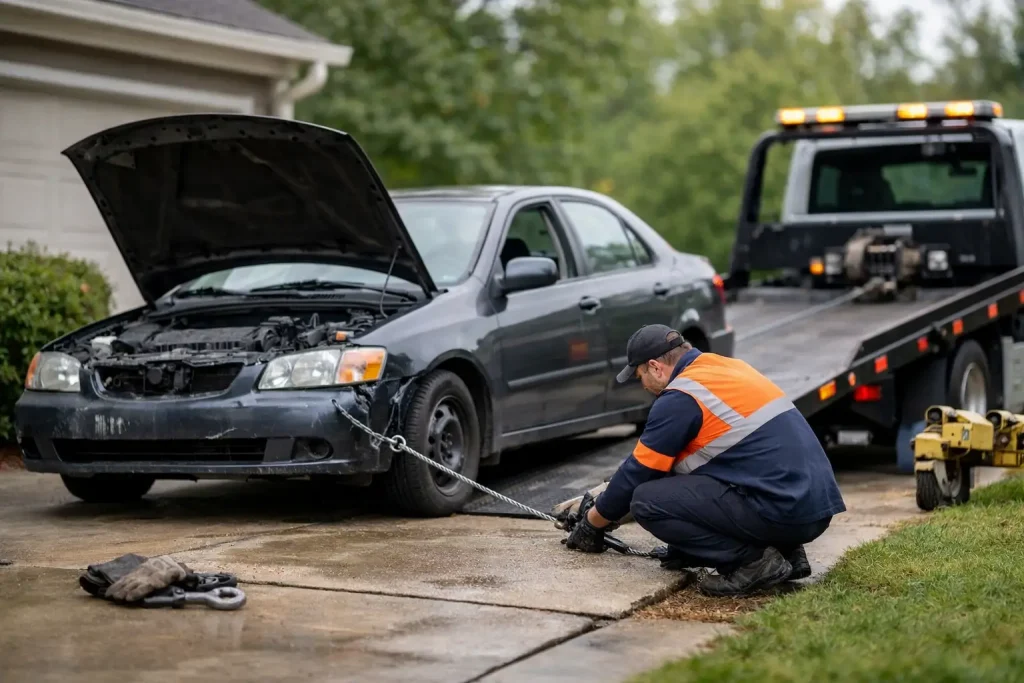
For most people, the fastest answer is simple. Call a professional vehicle removal service that picks up non-running, damaged, and unwanted vehicles directly from residential properties.
This is usually the best option because a broken car often cannot be moved safely by the owner. If it will not start, has flat tires, locked brakes, steering issues, or mechanical damage, trying to push it, tow it with another vehicle, or drag it out yourself can create a much bigger problem. You can damage the driveway, hit another vehicle, or hurt yourself.
A professional removal crew already has the right equipment and knows how to load vehicles that are stuck, dead, or parked in awkward spots. That matters more than most people realize. A car sitting on a flat, open pad is one thing. A car angled near a garage, tucked beside a fence, or parked on a slope is another.
What to have ready before pickup
The process is usually straightforward, but a little preparation helps everything move faster.
Start by removing your personal items from the vehicle. Check the glove box, center console, trunk, under the seats, and any storage pockets. People often forget paperwork, garage remotes, sunglasses, tools, chargers, or old plates.
Next, make sure you have proof that the vehicle is yours or that you are authorized to have it removed. The exact paperwork can vary depending on the situation, so it is smart to ask what is needed when you call. If the car has been sitting for a long time and the documents are not easy to find, say that up front. A good local removal company will tell you exactly what to prepare instead of leaving you guessing.
It also helps to clear a path to the vehicle if possible. Move other cars if you can. Open gates if access is tight. If the vehicle is buried in snow, blocked in, or parked on soft ground, mention that when booking the pickup. That way the crew can arrive prepared.
Why DIY removal is usually more trouble than it looks
On paper, handling it yourself can seem cheaper. In reality, it often turns into a full-day problem.
You may need to rent towing equipment, find someone with the right vehicle to help, and hope the broken car will actually roll. If it does not, the job gets harder fast. Even if you manage to move it, you still have to figure out where it can legally go and whether that location will accept it in its current condition.
There is also the safety issue. A non-running vehicle can shift unexpectedly when being winched or pushed. Flat tires, seized brakes, and uneven ground make things worse. What starts as an attempt to save money can end with damage to your property or someone getting hurt.
For most homeowners, especially busy families and rural property owners, the better trade-off is convenience. One phone call is usually a lot easier than trying to coordinate the whole thing yourself.
Common reasons people finally make the call
Most broken vehicles do not get removed the day they stop running. People wait because life gets busy, they are unsure what the process looks like, or they think it will be complicated.
Usually, the trigger is practical. They need the parking space back. The landlord wants it gone. The neighbors have started noticing. The vehicle has become a hazard for kids. The strata or local authority has raised concerns. Or the owner is simply tired of looking at a problem that never fixes itself.
That pattern is common across places like Salmon Arm, Vernon, Kelowna, and smaller Interior communities where driveways, side yards, and rural properties can end up holding onto dead vehicles for much longer than intended. The vehicle sits because there is room for it, until suddenly there is not.
What a good removal service should actually do
Not all services operate the same way, so it helps to know what to expect.
A reliable company should make the process easy from the first phone call. They should ask clear questions about the vehicle condition, where it is located, and whether there are any access issues. They should explain what paperwork you need, give you a realistic pickup window, and show up prepared to handle a non-running vehicle safely.
Just as important, they should treat you like a local customer, not a number. If you are already frustrated by a dead vehicle in your driveway, you do not need a vague process or a runaround. You need clear answers and a straightforward pickup plan.
That is where a local company tends to make a real difference. They understand the roads, the neighborhoods, the rural access challenges, and the fact that some jobs are urgent because the vehicle is causing immediate problems at home.
How fast can you remove broken car from driveway areas?
It depends on the vehicle, the location, and how accessible it is. A car parked in an open driveway with clear ownership information is usually simple. A vehicle tucked behind other cars, parked on difficult ground, or missing paperwork can take more coordination.
Still, removal is often much faster than people expect. If the service specializes in residential pickups, they are used to handling cars that do not run and situations that are less than perfect. The key is to be honest when you call. If the car has been sitting for years, if the tires are flat, or if access is tight, say so. Good information upfront helps avoid delays.
Signs it is time to stop waiting
If you are still on the fence, ask yourself a simple question. Is this vehicle likely to be repaired soon, or is it just taking up space while you put off a decision?
If it has no insurance, no near-term repair plan, major mechanical problems, or has been sitting untouched for months, waiting usually does not improve the situation. The car will not become easier to remove later. In many cases, it becomes harder because tires sink, brakes seize, and access gets worse.
There is also peace of mind to consider. Once the vehicle is gone, the driveway is usable again, the property looks better, and one nagging problem is off your list. That relief is usually the part people underestimate.
If you want the simplest path, call a local professional who handles problem vehicles every day. Scrap Your Car is built for exactly this kind of job – quick, straightforward removal from residential properties without making you jump through hoops.
A broken car rarely fixes itself by sitting longer. If it is done, it is done. Getting it out of the driveway clears more than space – it gives you one less thing to worry about.