
That old vehicle may not run, may not be insured, or may have been sitting beside the garage for years. But before it leaves your property, the paperwork matters. This guide to vehicle disposal paperwork explains what to gather, what to record, and how to protect yourself when you arrange for an unwanted vehicle to be hauled away.
For most owners, this is not about filling out a mountain of forms. It is about proving the vehicle is yours, making sure it is no longer connected to you after pickup, and knowing who to call if a document is missing. A little preparation can prevent a simple removal from turning into a frustrating loose end later.
Start With Proof That You Own the Vehicle
The most useful document is your current vehicle registration. In British Columbia, it is commonly the document that shows the registered owner, vehicle identification number, plate information, and other key details. Keep it handy when you call for removal, because a professional provider may need to confirm that the vehicle can be released by you.
Check that the name on the registration matches the person arranging disposal. If the vehicle belonged to a spouse, parent, relative, business, or estate, the situation may require additional authorization. Do not assume that having the keys or having the vehicle parked on your land is enough to prove you can dispose of it.
A few common ownership situations need extra attention:
- If there are two registered owners, find out whether both signatures or permissions are required.
- If the registered owner has passed away, keep estate or executor documents available before arranging removal.
- If the vehicle is owned by a company, the person calling should be authorized to act for that business.
- If the registration is not in your name, speak with the registered owner first rather than trying to sort it out at pickup.
This can feel like a nuisance when the vehicle is clearly beyond repair. Still, it protects owners, removal companies, and the community from disputes over vehicles that were never authorized for disposal.
What to Do if the Registration Is Missing
Missing paperwork is common, especially with vehicles that have been parked for a long time. Registration documents get lost in moves, old filing boxes, glove compartments, and stacks of insurance papers. Do not make up a bill of sale or rely on a handwritten note if you can avoid it.
Your first step is to contact an Autoplan broker or ICBC and ask what is required to replace or verify your registration. The right process depends on the vehicle’s status and whose name is on the record. If you have photo identification, the vehicle identification number, plate number, or older insurance documents, bring those details with you.
The vehicle identification number is especially useful. You can usually find it on the registration document and often on the vehicle itself, such as near the dashboard or driver-side door area. Make sure the number on your documents matches the vehicle. A mismatch should be dealt with before pickup, not after.
If you are unsure whether a missing document will stop removal, call before scheduling. A straightforward conversation can save you a wasted trip and help you learn which document or authorization is needed.
Remove Your Plates and Deal With Insurance
Your license plates and insurance are separate from the unwanted vehicle itself. Before the vehicle is taken away, remove your plates if they are still attached, unless you have been given different instructions by the appropriate registration authority. Keep them somewhere secure until you return them, transfer them, or receive direction on what applies to your situation.
Next, contact your Autoplan broker or insurer to cancel or adjust your coverage once the vehicle is no longer in your possession. Do not leave active insurance in place simply because the vehicle has been sitting unused. That can mean paying for coverage you no longer need.
The timing depends on your situation. If the vehicle is still being driven or needs to remain insured until its scheduled pickup, wait until it has actually left your property. If it has been off the road and uninsured for a long time, confirm its status anyway. You want your records to show that you are no longer responsible for the vehicle after disposal.
Keep any cancellation confirmation or updated insurance paperwork with your disposal records. It is a small step that gives you a clear paper trail.
Get a Written Record of Pickup
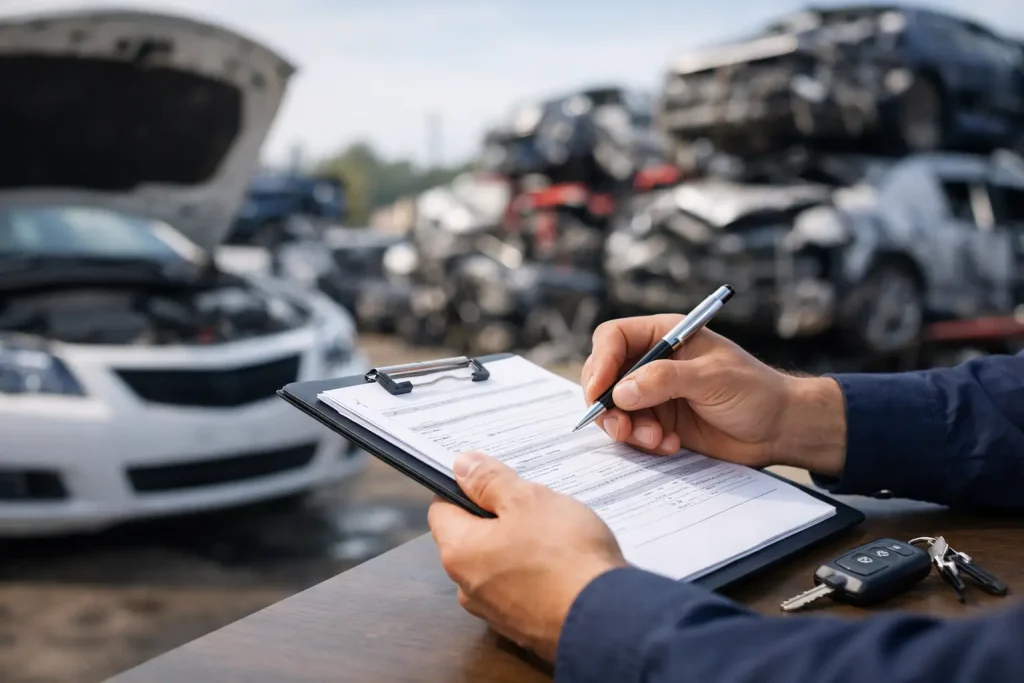
When someone removes your vehicle, ask for a written receipt, bill of sale, release, or other record that identifies the vehicle and the date it was collected. The document does not need to be complicated, but it should be clear enough to show what happened.
At minimum, your copy should include the vehicle’s year, make, model, vehicle identification number when available, pickup date, and the name of the business or person taking possession. Your name and the pickup address are also helpful. If you are signing a transfer or release form, read it before signing and keep a copy or photo for your records.
This record is your proof that the vehicle left your property. Put it with your registration and insurance documents, then keep it for a reasonable period. If a question ever comes up about parking, property cleanup, insurance, or ownership, you will not have to rely on memory.
A legitimate local removal company should be comfortable explaining what paperwork they need from you and what proof they can provide after pickup. If someone rushes you to hand over a vehicle without discussing ownership or documentation, slow down and ask questions.
Check the Vehicle Before It Goes
Paperwork is only half the job. Before pickup, give the vehicle one final check. Look in the glove box, center console, under the seats, trunk, door pockets, and any storage compartments. Old vehicles often hold registration slips, service records, garage remotes, personal papers, sunglasses, tools, and spare keys.
Remove anything that identifies you personally, including insurance documents, bank mail, old receipts with account information, and address labels. If you find documents that relate to the vehicle, keep them with your disposal file rather than leaving them inside.
Take a few clear photos before pickup. Photograph the overall vehicle, the license plate if it is still on, and the vehicle identification number if accessible. This is not meant to create extra work. It simply gives you a dated record of the vehicle’s condition and location before it leaves.
Special Cases That Need a Phone Call First
Some unwanted vehicles have complications that cannot be fixed with a standard pickup receipt. If there is a lien on the vehicle, a disagreement over ownership, an unfinished estate matter, or damage that makes the identification number difficult to read, get guidance before arranging removal.
The same applies if the vehicle has been abandoned on your property by someone else. You may be tired of looking at it, but disposing of another person’s vehicle without authority can create a bigger problem. Municipal rules, towing requirements, and notice periods can apply depending on where you live.
Rural properties can add another layer. A vehicle may have been parked behind a barn, in a field, or at a seasonal property for decades, with paperwork long gone. In that case, start with ownership verification rather than assuming the age of the vehicle makes documentation unnecessary.
A Simple Checklist for Disposal Day
By the time pickup is scheduled, you should have your registration or approved ownership documents ready, personal belongings removed, plates dealt with, and a plan for insurance cancellation or adjustment. Keep your photo ID nearby in case the removal provider needs to confirm the registered owner.
Make sure the vehicle is accessible. Clear a path if it is blocked by other vehicles, snow, gates, or stored items. Tell the company about flat tires, missing keys, tight driveways, or a vehicle that has sunk into soft ground before they arrive. Clear information helps prevent delays and lets the crew bring the right equipment.
For homeowners in Salmon Arm and surrounding Interior communities, this kind of preparation makes the whole process faster. Scrap Your Car can help take the burden of an unwanted vehicle off your property, but having the right documents ready is what keeps the handoff clean and stress-free.
A problem vehicle should not keep taking up room in your driveway, yard, or mind. Gather your records, ask questions early when something does not match, and keep proof of the final pickup. Then you can close the file and get your space back.